For more than a decade, franchisors and franchisees have operated amid an evolving and often uncertain legal landscape concerning one of the most significant issues in franchise law: when may a franchisor be deemed a “joint employer” of a franchisee’s employees? The answer has substantial legal and business implications. A finding that a franchisor is a joint-employer may expose that franchisor to collective bargaining obligations, unfair labor practice claims, wage-and-hour liability, and other employment-related risks stemming from a franchisee’s workplace. A bill pending in the U.S. House of Representatives, the proposed American Franchise Act, seeks to provide greater clarity by establishing a clear, franchise-specific statutory standard for determining joint-employer liability.
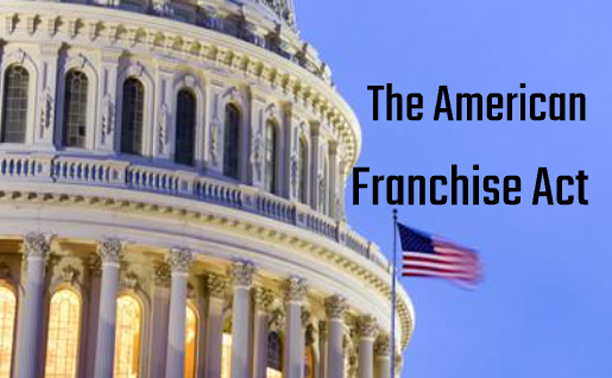
On September 10, 2025, a bipartisan group of members of the U.S. House of Representatives introduced legislation (H.R. 5267), known as the American Franchise Act (the “Act”), aimed at “preserving the franchise business model” by establishing a uniform federal standard for determining when a franchisor may be deemed a “joint employer” of a franchisee’s employees under federal labor law. On July 21, 2026, the bill made it out of committee in the House. The vote was 18-15 along party lines. The next step is for the bill to advance to the full House floor for consideration.
If enacted, the bill will address years of fluctuating interpretations by the National Labor Relations Board, the U.S. Department of Labor and the federal courts, where the joint-employer standard has expanded and contracted depending on the presidential administration in office. These shifting interpretations have created considerable uncertainty for franchise systems attempting to balance necessary brand oversight with the legal requirement to maintain a clear separation between franchisor and franchisee operations. Franchisors must exercise sufficient oversight to protect their trademarks and preserve brand standards, operational consistency, quality controls, marketing requirements, and customer experience expectations, while franchisees remain independent business owners responsible for recruiting, hiring, firing, training, supervising, scheduling, compensating, disciplining and terminating their own employees. The proposed legislation is intended to preserve that distinction by clarifying when a franchisor’s brand oversight crosses the line into employment-related control.
What the Act Would Do
At its core, the American Franchise Act would establish that a franchisor and franchisee are separate and independent employers unless the franchisor both possesses and exercises substantial, direct, and immediate control over essential terms and conditions of employment. Those employment-related factors generally include decisions involving hiring, termination, discipline, supervision, direction, compensation, benefits, and work schedules. The proposed legislation is intended to draw a clear distinction between legitimate franchise system oversight and actual control over a franchisee’s employment decisions.
That distinction is fundamental to the franchise business model. Franchisors rely on systemwide operational standards to protect their trademarks, preserve brand consistency, and ensure that customers receive a uniform experience across franchised locations. To achieve these objectives, franchisors routinely establish brand standards governing the use of trademarks, operating manuals, product specifications, technology platforms, training programs, marketing and advertising initiatives, customer service expectations, cleanliness requirements, and periodic brand-compliance audits, among other things. The Act is designed to recognize that these types of brand protection measures, standing alone, do not transform a franchisor into the employer of a franchisee’s employees.
At the same time, if a franchisor regularly and meaningfully controls core employment matters—such as making hiring decisions, setting wage rates, approving terminations, directing day-to-day supervision, or controlling employee schedules—the franchisor could still be deemed a joint employer. In that sense, the proposed legislation does not immunize franchisors from joint-employment exposure. Instead, it attempts to define the line between protecting a franchise brand and controlling a franchisee’s employees.
Why the Joint-Employer Standard Matters
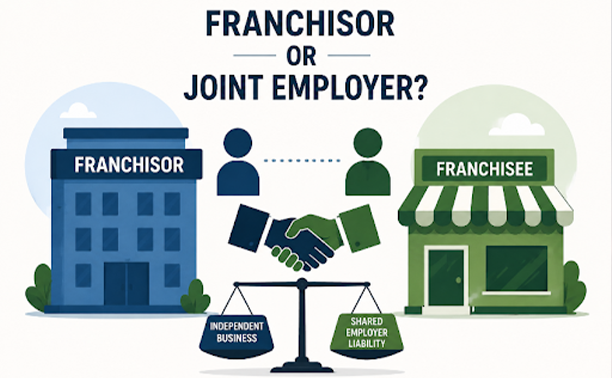
The franchise relationship occupies a unique space in commercial law. Franchisees operate local businesses under a licensed brand, but they are not branch offices of the franchisor. They typically sign leases, employ staff, manage payroll, purchase supplies, and make day-to-day operational decisions. Franchisors, meanwhile, protect systemwide goodwill by setting the standards that customers associate with the brand.
A broad or ambiguous joint-employer rule can pressure franchisors to reduce support to franchisees for fear that training, guidance, technology, compliance assistance, or operational recommendations could be characterized as evidence of employment control. That result can be counterproductive. Franchisees often choose franchising precisely because they want access to a proven system, brand resources, operational guidance, and ongoing support. If franchisors pull back from those functions, franchisees may lose tools that help them compete and grow.
At the same time, employee protections remain a critical consideration. Workers should not lose rights simply because an employer operates within a franchised network or system. The legal question is who has actual authority over the employment terms at issue. The Act attempts to preserve that accountability by focusing on direct and immediate control over essential employment conditions rather than indirect influence or ordinary brand oversight.
Where the Act Stands Now
The American Franchise Act continues to advance through the legislative process. After several markup sessions, on July 21, 2026, the House Committee on Education and the Workforce voted 18-15 to report the amended bill favorably to the full House of Representatives, marking the first significant legislative advancement of the proposal. During those markup sessions, the committee revised the language of the Act to establish that a franchisor can only be deemed a joint employer if it possesses and directly exercises “substantial, direct, and immediate control” over essential employment terms, such as hiring, wages, or scheduling. The committee vote does not enact the legislation, but it signals meaningful momentum and places the Act in the next stage of congressional consideration. The bill will now proceed to the House floor for consideration, where it must be approved by the full House before advancing to the Senate. If the bill passes the full House, the Senate must take up and pass its companion measure (or the House bill) before it can move to the President’s desk. Industry groups are targeting major lobbying pushes, such as the International Franchise Association Advocacy Summit in September, to drive further momentum.
Conclusion
Although the Act has not yet been enacted and may change as it advances through the legislative process, it represents an important effort to create a clear, uniform federal standard for joint-employer liability in the franchise context. Whether the Act ultimately becomes law, it provides a timely reminder that franchisors and franchisees should carefully define, document, and preserve their respective roles. Franchisors should, in most cases, periodically review their franchise agreements, operations manuals, training programs, technology platforms, and compliance practices to ensure they do not inadvertently exercise substantial, direct, and immediate control over franchisee employees. Franchisees, likewise, should in most cases maintain independent employment policies and practices consistent with their responsibilities as separate employers. By proactively evaluating these issues, both franchisors and franchisees can help reduce joint-employer risk while preserving the balance between brand protection and operational independence that is central to the franchise business model.
This post is provided for general informational purposes and does not constitute legal advice. For more information about the American Franchise Act, please contact Kaufmann Gildin & Robbins LLP. If you would like us to assess whether your franchise operations may expose you to joint employer liability, contact us. We can help. Call Michelle Murray-Bertrand, Esq. at 212-755-3100 or email [email protected].
*Attorney advertising. © 2026 KAUFMANN GILDIN & ROBBINS • ALL RIGHTS RESERVED. Disclaimer: The information you obtain at this site is not, nor is it intended to be, legal advice. You should consult an attorney for advice regarding your individual situation. We invite you to contact us and welcome your calls, letters and electronic mail. Contacting us does not create an attorney-client relationship. Please do not send any confidential information to us until such time as an attorney-client relationship has been established.